
Your home is one of the biggest investments that you will ever make in your life which means that protecting it as much as possible should be paramount. If you live in San Diego, you are all too familiar with the possibility of wildfires. Recently, the state of California enacted Assembly Bill No. 3074 that has a direct impact on the building and reconstruction of homes in California which adds an extra level of protection not only to your home but the homes around you.
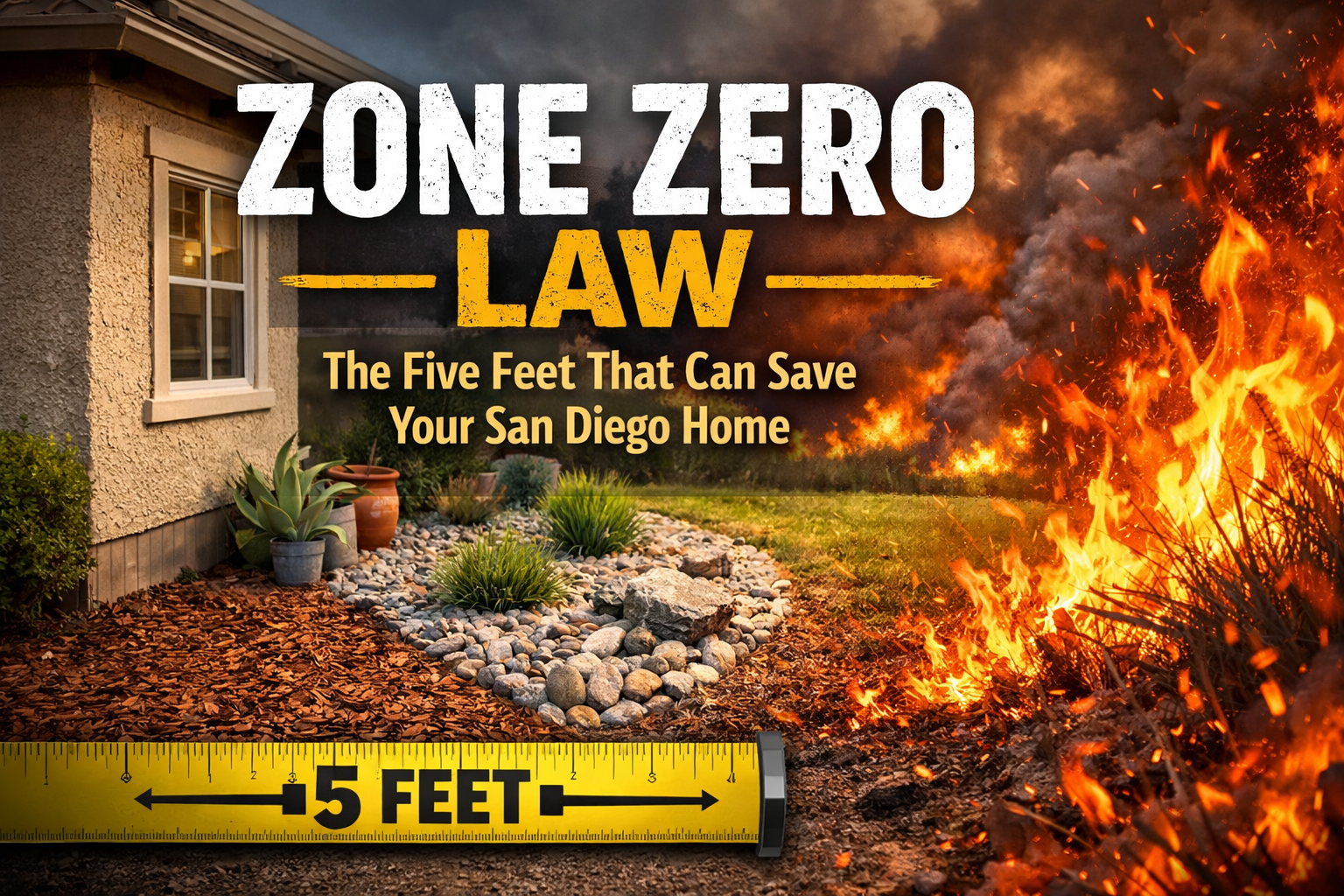
Zone Zero is commonly known as the first five feet around your home and maintaining this space to not trigger more of a fire hazard is something that is now required by California for anyone who is building a home. Soon, it will be a requirement of current homeowners to create this five-foot barrier to reduce the possibility of mass property damage as a result of a wildfire. If a Zone Zero parameter is not maintained around your property, you face the possibility of a denial for any insurance claims that you file for property damage following a wildfire. Here is everything you need to know about Zone Zero, the new law and how your insurance claim can be impacted if you do not follow these mandates.
What Is Zone Zero in San Diego?
Zone Zero is the five-foot perimeter around your home’s exterior walls and any structure attached to it. That includes patios, decks, porches, and the areas where fences meet the house. It is not about trimming plants or spacing shrubs. It is about removing anything that can burn.
It’s at this point where homeowners often get confused. They think wildfire safety means cutting back trees and shrubs. Zone Zero is different. It means choosing not to place combustible things there in the first place.
When Jeff Seals Remodeling works on patios, decks, or exterior upgrades, this zone naturally comes into focus. The question becomes less about how something looks and more about how it behaves under extreme conditions. A hardscape surface right against the house behaves very differently from a landscaped bed. One resists fire. The other invites it.
What is California’s New Zone Zero Defensible Space Law?
California’s new Zone Zero law represents a major shift in how the state approaches wildfire protection for homes, especially in high-risk fire areas. The law focuses on the first five feet surrounding a structure, an area now recognized as one of the most critical zones for preventing ignition from wind-driven embers. In this space, homeowners are expected to remove or limit combustible materials such as dry vegetation, wood fencing that connects to the home, flammable mulch, and other items that can easily catch fire.
The idea is simple but powerful: if embers cannot find fuel right next to the structure, the chance of the home igniting drops significantly. Rather than relying only on larger defensible space zones farther from the house, Zone Zero puts the emphasis on immediate protection at the structure itself. This change reflects lessons learned from recent wildfires, where many homes were lost not from direct flames, but from small embers landing close to buildings and igniting nearby materials. By strengthening this first line of defense, the law aims to make homes more resilient and give firefighters a better chance to protect entire neighborhoods during wildfire events.
How California’s Zone Zero Impacts Insurance Claims
California’s Zone Zero law doesn’t change the fine print of your insurance policy, but it can play a meaningful role in how your home is viewed by insurance companies before and after a wildfire. As insurers continue tightening their standards in high-risk fire areas, compliance with defensible space requirements, especially the five-foot Zone Zero around a structure, is becoming an important factor in determining insurability. Homes that show clear efforts to reduce fire risk are often seen as better protected, which can improve the chances of securing coverage, maintaining a policy, or even qualifying for more favorable rates.
When a wildfire claim is filed, having documentation that Zone Zero guidelines were followed can also help demonstrate that the homeowner took reasonable steps to protect the property, reducing the likelihood of disputes about neglect or preventable risk. While insurers cannot deny a legitimate claim solely based on landscaping or defensible space choices, failure to maintain proper clearance can influence how a property is evaluated in the future. In many ways, Zone Zero is becoming part of the broader conversation between homeowners and insurers about responsibility, risk reduction, and long-term insurability in California’s wildfire-prone regions.
Why Did San Diego Make Zone Zero Non-Negotiable?
San Diego homes are in a unique environment. We have steep terrain, canyons that act like wind tunnels, and vegetation that dries quickly. Even well-maintained landscaping can become fuel under the right conditions. And because many neighborhoods are built close together, a fire that starts in one home can expose several others within minutes.
Zone Zero is often the only space a homeowner truly controls. You might not be able to change what’s in the canyon behind your house or how your neighbor maintains their yard, but you can control what touches your walls.
That’s where remodeling work becomes part of wildfire preparation. When we build a new deck, pour concrete, or upgrade an outdoor living space, we don’t just improve comfort and appearance; we also enhance the value of the home. We shape how fire behaves near the structure. Good design isn’t just about beauty. In San Diego, it’s about resilience.
What are the Subtle Risks Often Missed Regarding Fire Hazards?
Some of the most dangerous fire hazards don’t look dangerous at all. Mulch beds along foundations are one of the biggest culprits. They’re tidy, attractive, but also highly flammable. Wooden planters, trellises, and decorative fencing also pose problems when attached to the home.
Decks are another central risk area. Embers don’t just land on top of them. They blow underneath and lodge between boards. Storage under decks is a common mistake, especially in side yards where space is tight.
Jeff Seals Remodeling often works on decks and outdoor structures, and experience matters most in these projects. When you understand how fire behaves, you start designing with limited hiding places for embers and fewer pathways for flames to reach the house.
The Fence That Acts Like a Fuse
In many neighborhoods, wood fences run directly into homes. When a hedge ignites, it can act like a fuse, delivering flames directly to the structure. These pathways are among the fastest ways for fires to spread from property to property.
When contractors work on exterior projects, this connection becomes obvious. Creating a break at the fence-to-house junction or transitioning to non-combustible materials is a small change that makes a considerable difference.
It is at these times that working with experienced general contractors like Jeff Seals Remodeling matters. We’ve seen how fire spreads and understand that small design choices can have significant consequences.
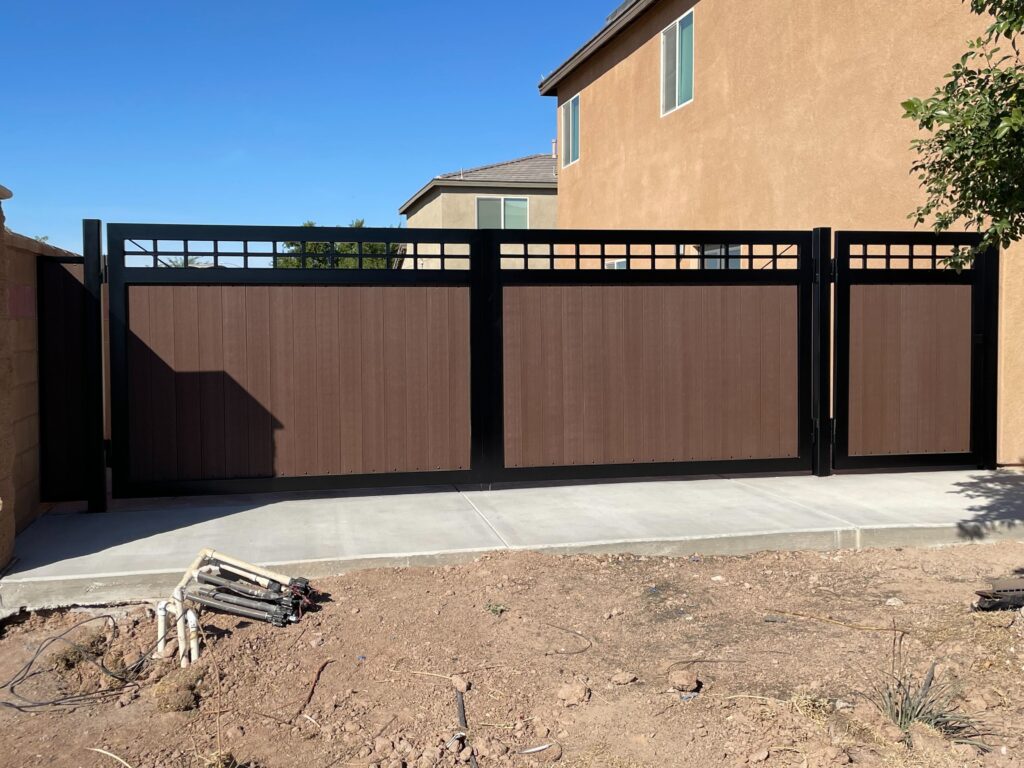
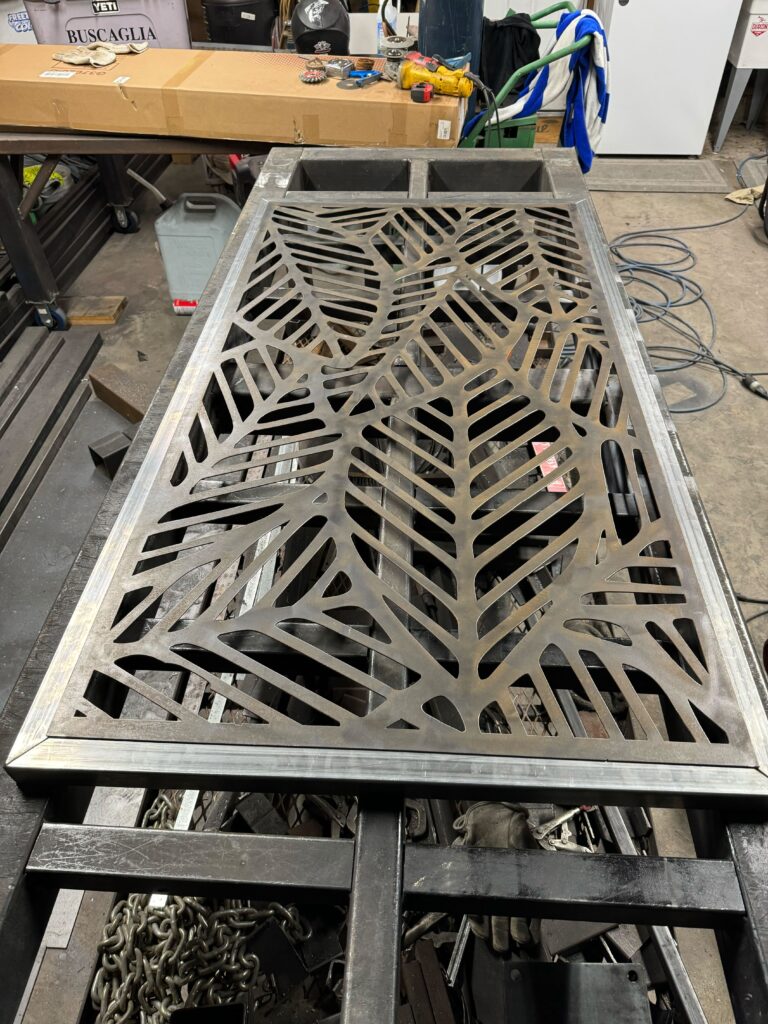
Here are a few examples of fences that will need to be updated in light of the new law:

Is Remodeling Is the Best Time to Think About Fire Safety?
Most homeowners don’t often think about wildfire mitigation. But they do consider remodeling. They think about updating kitchens, improving outdoor spaces, building decks, adding ADUs, or modernizing older homes.
Those projects are the perfect opportunity to strengthen Zone Zero. When you’re already changing materials, layouts, or structures, you have a chance to build safety into the design without it feeling like an extra burden. Concrete walkways near the foundation, cleaner deck designs, and smarter transitions between the home and yard all serve dual purposes: they look good and reduce fire risk.
Jeff Seals Remodeling’s role as a general contractor puts us at the center of those decisions. We don’t merely execute plans. We help homeowners think differently about how their homes interact with the environment.
Can Zone Zero Protect More Than Your Own House?
In dense San Diego neighborhoods, fire is rarely isolated. One home igniting can expose many others. When your Zone Zero is impenetrable, your house is less likely to become a source of radiant heat or embers that threaten nearby properties.
Here’s where personal responsibility becomes community protection. Every hardened home increases the resilience of the block. It slows fire spread. It gives firefighters a better chance. It reduces the domino effect that makes wildfires so destructive in urban areas.
A Shift in How We Build in San Diego
Living in San Diego means building with awareness. It means understanding that our climate and terrain demand more than just pleasing aesthetics. They demand resilience.
We represent that shift. Our work spans interior comfort and exterior durability. Kitchens, bathrooms, decks, patios, concrete, and complete remodels all become part of a bigger picture when wildfire is part of your environment. Zone Zero is where that awareness becomes visible.
Protect Your Biggest Investment
The most crucial space around your home isn’t your backyard or your view. It’s the five feet closest to your walls.
Zone Zero is where embers land, it’s where fires start, and it’s where prevention works. In San Diego, where wind, terrain, and development collide, that small strip of space carries enormous responsibility. Whether you’re planning a complete remodel, upgrading a patio, or building a deck, working with professionals who understand both construction and wildfire realities makes all the difference.
Jeff Seals Remodeling doesn’t just build beautiful homes. We construct with the understanding that in San Diego, how we build can determine whether your home stands when fire comes close. And sometimes, saving your home starts with the simplest idea of all: protect the five feet that matter most.
Leave a Reply